
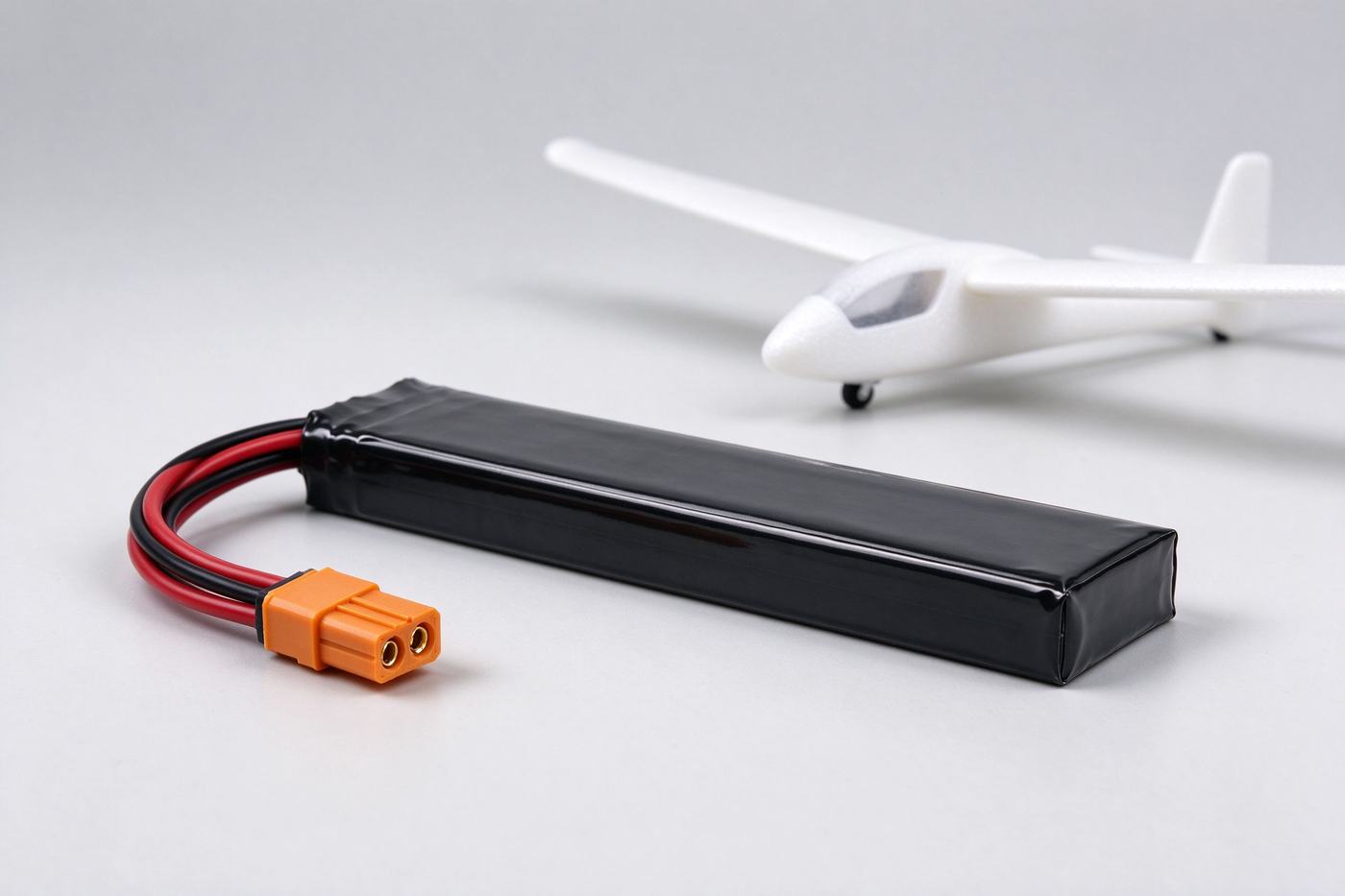
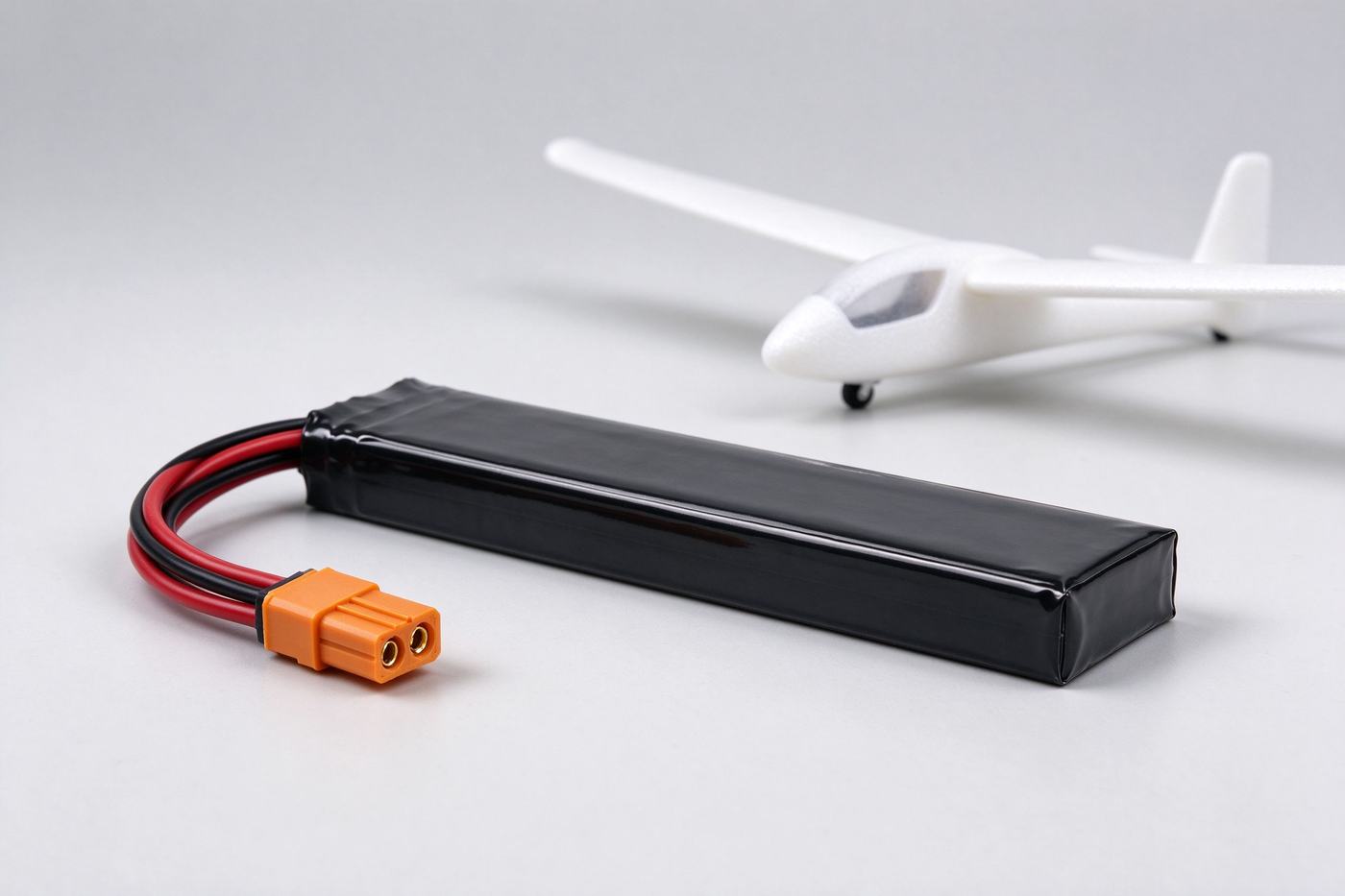
A 3S 3200mAh 30C LiPo pack — the size most 1.1–1.5 m foam trainers and park flyers are built around.
The pack these models were designed around.
A 3200mAh 3S pack is the middle ground that most foam trainers, park flyers and small gliders are set up for. It carries enough energy for a full flight without the weight penalty of a bigger pack, it is thin enough to slide into a slim fuselage bay, and its 30C rating leaves headroom over what a stock 3S power system actually pulls. Fit the pack the model was designed for and the centre of gravity, the flight time and the climb all land where the designer intended.
- ✓35.52Wh of usable energy — 3.2Ah at 11.1V, which is the capacity class these models are trimmed for.
- ✓Slim enough for a fuselage bay — 142.0 × 42.5 × 21.5 mm, a flat pack rather than a block.
- ✓315 g, so the wing loading stays low — light enough that a trainer still floats, and easy to move back or forward to set the balance point.
- ✓Current headroom — 30C works out at about 96A on tap, comfortably above a stock 3S setup.
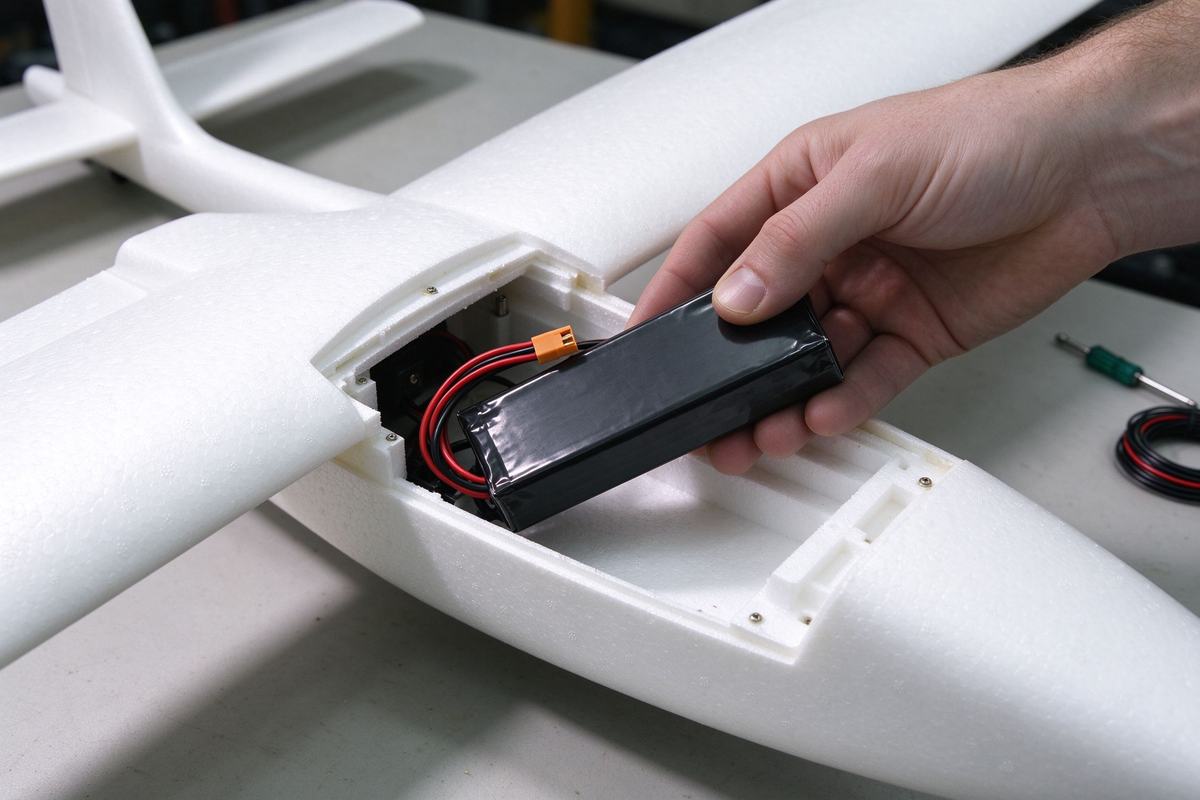
3200mAh, 3S, 30C — what the numbers actually mean.
Four numbers decide whether a pack suits your model, and they are all on the label. 3S means three cells in series, so 11.1V nominal and 12.6V when fully charged. 3200mAh is the capacity — 3.2Ah of charge, or 35.52Wh of energy at 11.1V, which is what sets your flight time. 30C is the discharge rating: multiply it by the capacity and you get the current the pack can deliver. Get those three right and the pack simply works; get the cell count wrong and nothing else matters.

Energy in, flight time out — capacity and cell count are what decide how the model performs.
Built to survive a foam model’s working life.
A pack in a foam model gets handled constantly: slid in and out of a bay, dropped on grass, squeezed next to a hatch. This one is a soft pack, but with thicker internal metal side plates that stiffen the cells and spread heat, so the stack is not relying on the shrink wrap for protection. The output leads are heavy gauge, they enter the pack through a moulded strain-relief boot, and they end in a keyed plug that can only go together one way.
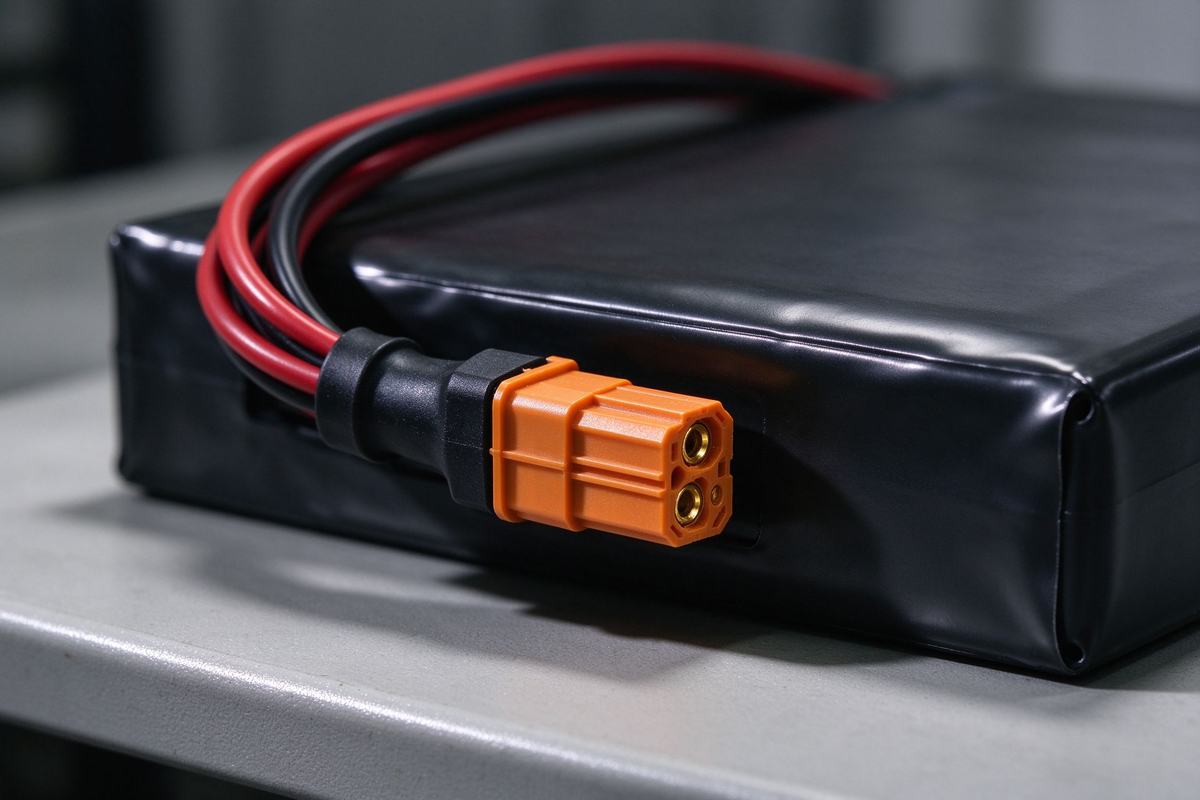
Keyed plug, gold-plated contacts and a moulded strain-relief boot where the leads leave the pack.
- ✓Thicker internal metal side plates. They protect the cells from knocks and spread heat across the pack instead of letting it build up in one place.
- ✓Heavy-gauge output cable. The leads are sized for the current a 3S model pulls, with a moulded boot that stops the cable chafing where it leaves the pack.
- ✓Keyed, polarity-safe plug. It only fits one way round, which removes the most common way people damage a pack or an ESC.
- ✓Single-connector balance. Balance charging is carried through the main plug, so there is no separate balance lead to route or lose.
Charge it right and it lasts for seasons.
Lithium packs do not wear out from flying, they wear out from how they are charged and stored. Four habits cover almost everything, and none of them takes longer than a minute.
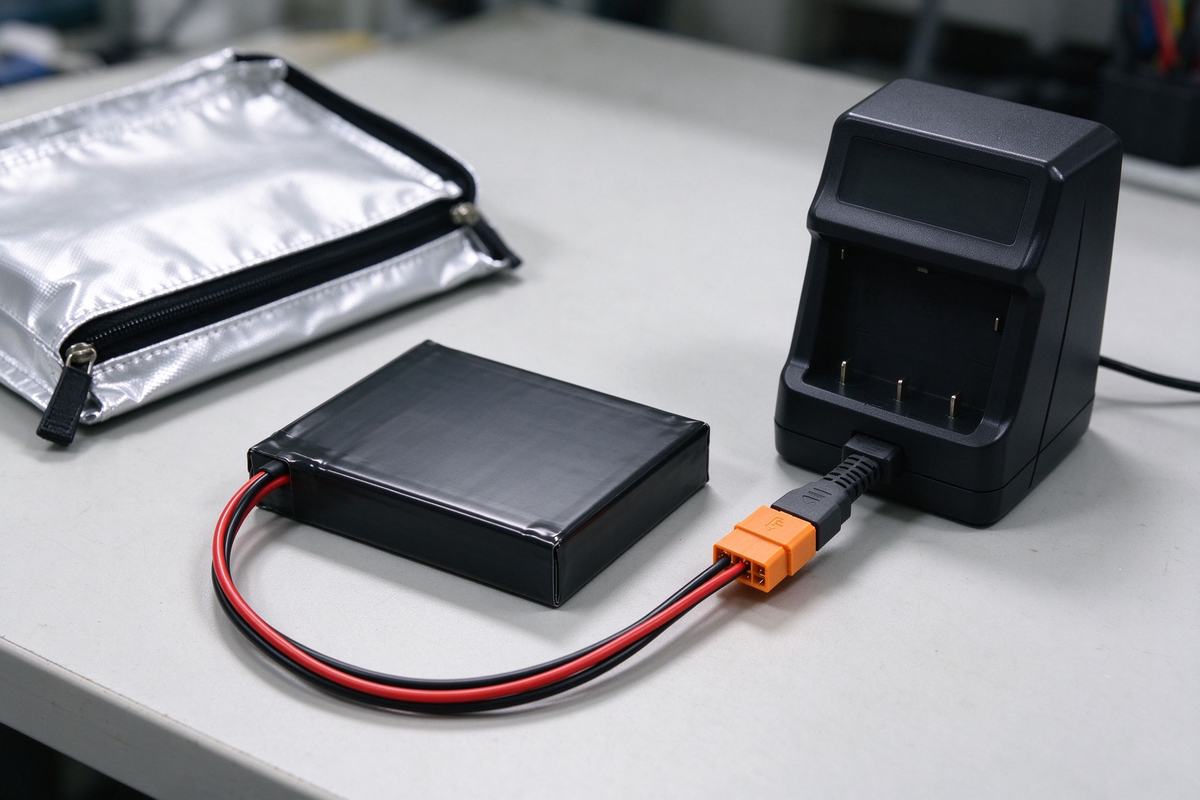
One plug, one charger lead, and a fire-resistant bag within reach — the whole routine.
Five things to check before you order.
A pack is only the right pack if it fits the bay, suits the power system and can be charged with what you already own. Here is the whole checklist, in one table.
| What to check | This pack | Result |
|---|---|---|
| Power system | 3S — 11.1V nominal, 12.6V full | For 3S models only, not 2S or 4S setups |
| Bay dimensions | 142.0 × 42.5 × 21.5 mm | Measure the bay — a flat pack needs length as well as width |
| Weight and balance | 315 g | Re-check the centre of gravity after fitting |
| Connector and balance | Keyed single plug, balance carried through the main connector | No separate balance lead to plug in |
| Charger | Single-connector charging | A charger with a separate balance port needs an adapter cable |
| Models it suits | 1.1–1.5 m foam trainers, park flyers, small gliders and similar 3S models | Direct fit for the class it is sized for |
This pack, a smaller pack, or a cheap pack.
A 3S pack is a 3S pack until you look at capacity, weight and how the cells are protected. Here is the honest comparison against the two alternatives people usually weigh up.
| 3200mAh 30C (this pack) | Smaller 3S pack | Cheap unbranded 3S pack | |
|---|---|---|---|
| Capacity & energy | 3200mAh / 35.52Wh | Often 2200–2600mAh / 24–29Wh | Printed capacity is not always what you get |
| Flight time | A full flight on one pack | Shorter — about a third less at the same current | Drops off quickly as the pack ages |
| Current on tap | 30C ≈ 96A | Lower, because the capacity is lower at the same C | C ratings that cannot be verified |
| Dimensions | 142.0 × 42.5 × 21.5 mm, 315 g | Smaller and lighter — useful in very small models | Rarely published accurately |
| Cell protection | Thicker internal metal side plates | Usually thin plates | Often none beyond the wrap |
| Charging | Single-connector balance, 1C standard, up to 5C maximum | Often a separate balance lead only | Mixed standards; adapters often needed |
| Who it suits | Trainers and park flyers that need a full flight per pack | Very small models where every gram counts | Light, occasional use only |
Every number, in one place.
Everything below is a measurable fact about the pack. If your model runs 3S, has a bay that takes a 142.0 × 42.5 × 21.5 mm pack, and you can charge through a single connector, it will work.
| Specification | Value |
|---|---|
| Chemistry | Lithium polymer (LiPo) |
| Configuration | 3S — three cells in series |
| Voltage | 11.1V nominal (12.6V fully charged) |
| Capacity | 3200mAh (3.2Ah) |
| Energy | 35.52Wh |
| Discharge rating | 30C (≈ 96A) |
| Standard charge rate | 1C (3.2A) |
| Maximum charge rate | 5C (16A) |
| Dimensions | 142.0 × 42.5 × 21.5 mm (5.59 × 1.67 × 0.85 in) |
| Weight | 315 g (11.11 oz) |
| Case | Soft pack with thicker internal metal side plates |
| Connector | Keyed single plug, gold-plated contacts |
| Balance connection | Carried through the main connector — no separate balance lead |
with keyed single plug pre-fitted
Check your battery bay dimensions and your charger before ordering.
Look after it and it will outlast several models.
A LiPo pack is the one part of a model that fails dangerously rather than gracefully. None of it is difficult — it just has to be done every time.
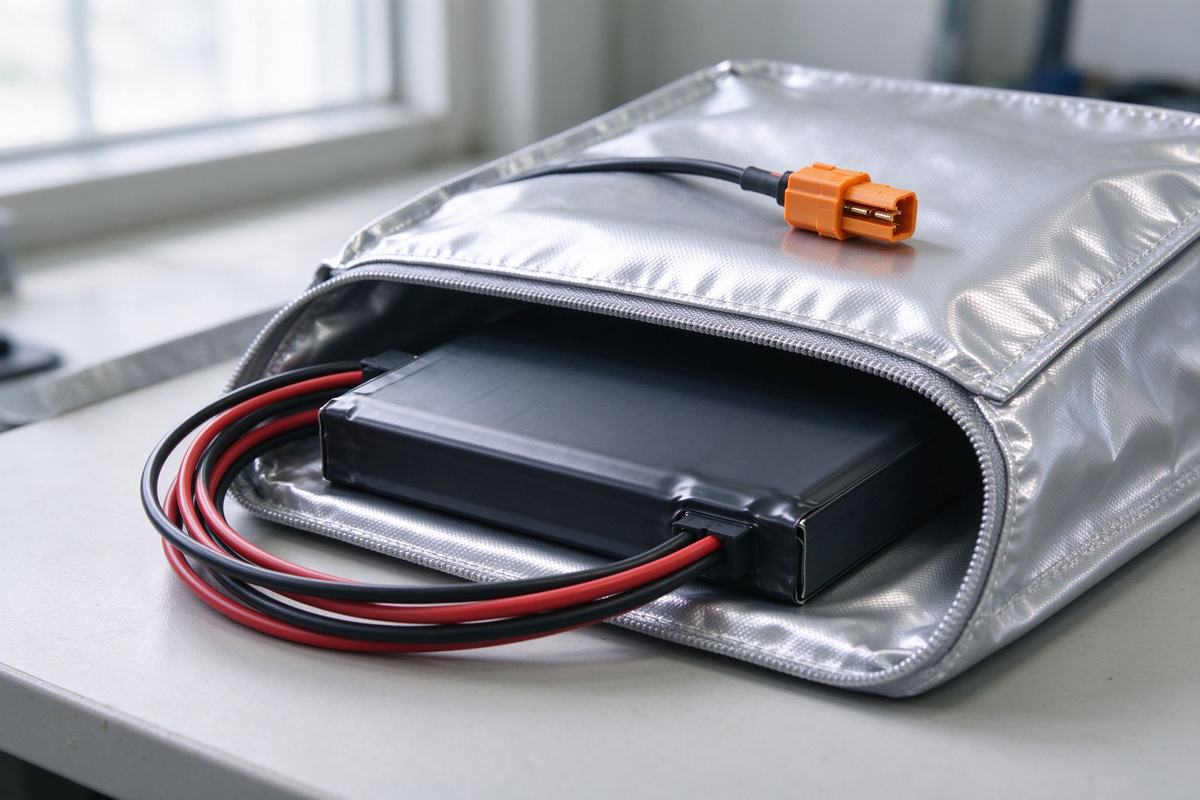
Part-charged and stored in a fire-resistant bag — the two habits that matter most between flying days.




Reviews
There are no reviews yet.