
Cheap film shows up in the print, not in the price.
Transfer film has two jobs: feed through the printer without curling, and release cleanly after the press. Thin, single-side-coated film struggles at both — and you only find out after you have spent the ink.
- ▪ Curl is the enemy. A sheet that will not lie flat catches in the feed and smears a pass before you notice it.
- ▪ Even coating is what makes color. Patchy coating prints light in the middle of a solid block and leaves a dull, grainy transfer at the edges.
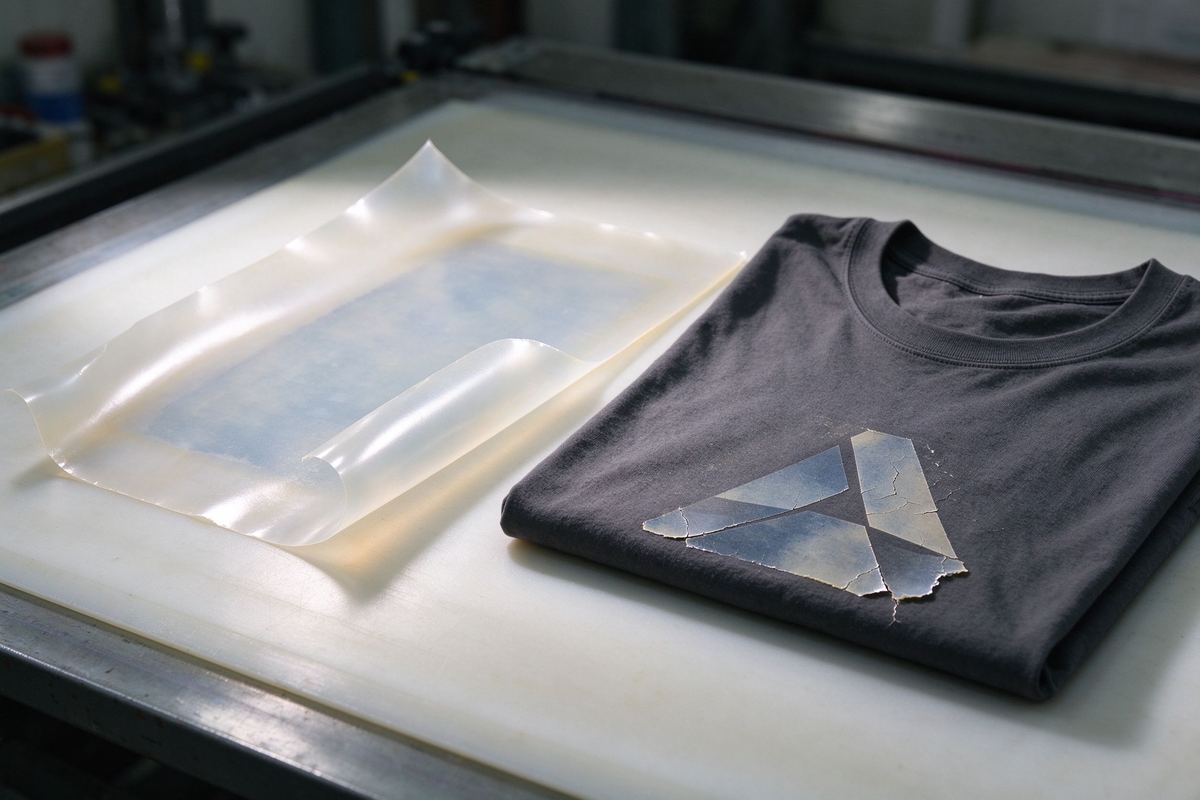
- ▪ A film that releases badly tears the print. It takes fibers with it and leaves a ragged edge that no amount of pressing will fix.
- ▪ The film is the cheapest part of a DTF setup and the one that decides whether the print is sellable.
A3 sheets that lie flat and let go clean.
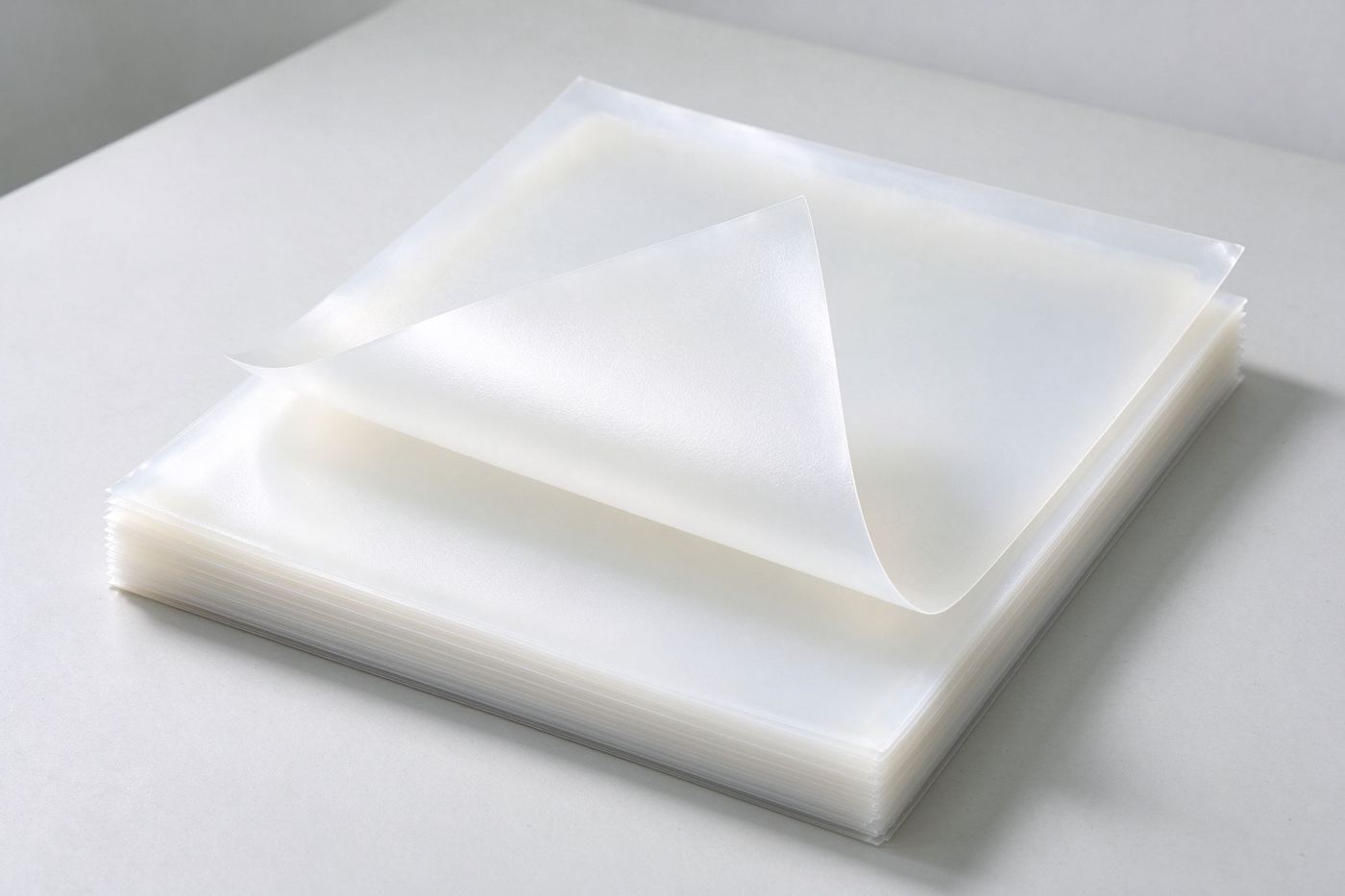
Two packs of 100 A3 sheets, matte coated on both faces, cut square so they load straight and press without a fight.
Both sides carry the same matte coating, so the sheet feeds consistently and the coated face takes DTF pigment ink evenly — including the white pass under a solid area.
11.7 × 16.5 in gives you a full front or back print in one pass, and still leaves room to nest two or three smaller logos on a single sheet.
A PET base thin enough to stay soft on the garment after pressing, and stable enough to hold its shape through the powder and cure steps.
Two packs of 100. Stored stacked and resealed, sheet 200 feeds the same way sheet one did.
The coating is what the ink holds on to.
Hold a sheet up to the light and the whole story is in the surface: one even matte grain, a thin clear base under it, and a square trimmed edge.
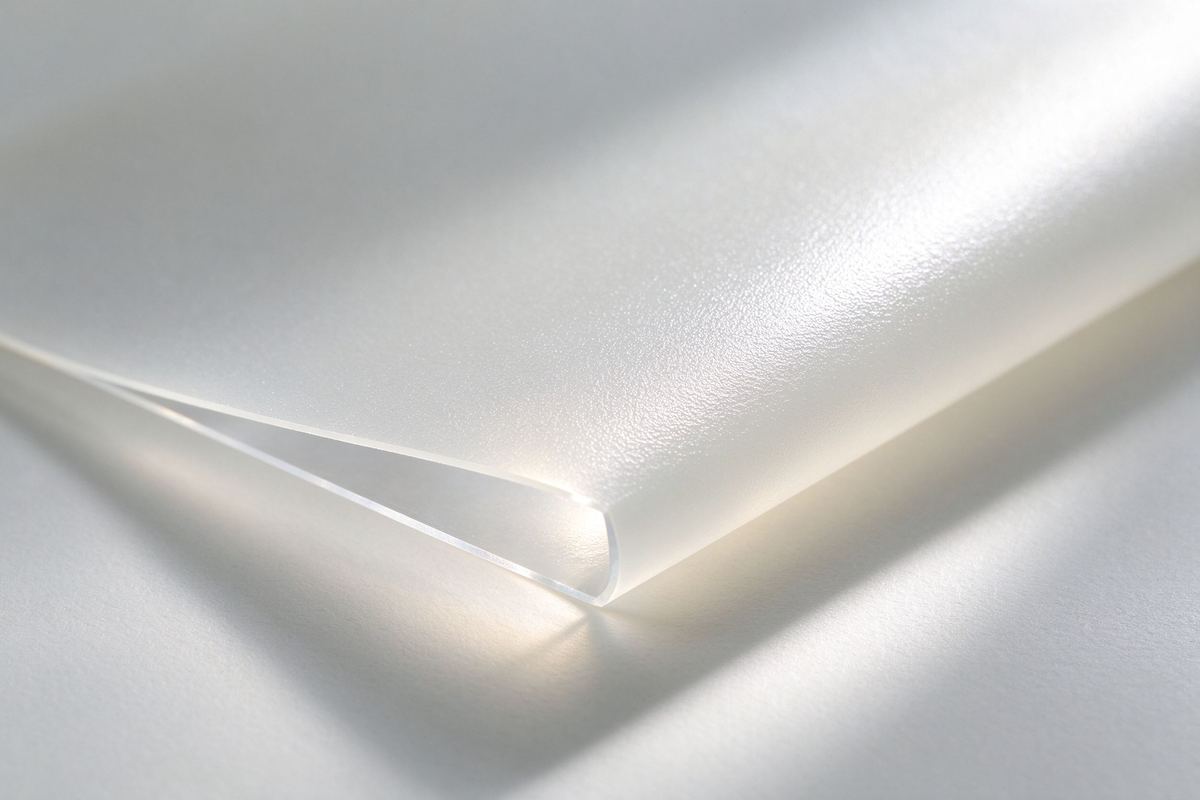
- ▪ Uniform from corner to corner. The matte grain should read the same edge to edge. Gloss in one area and dullness in another is what prints as a pale patch.
- ▪ Matte is a function, not a finish. A matte coated face holds the pigment without beading and grips in the feed, so the printed layer stays where it was printed.
- ▪ Thin base, real body. The clear PET layer under the coating is what keeps the sheet flat through the heat of the press and stops it curling as it cools.
- ▪ Cut square, no catching corners. Square trimmed sheets load straight and the corners do not snag the feed.
Print, powder, cure, press, peel.
Standard DTF process, start to finished garment. Settings vary by printer and powder, so run a test transfer before a production batch.
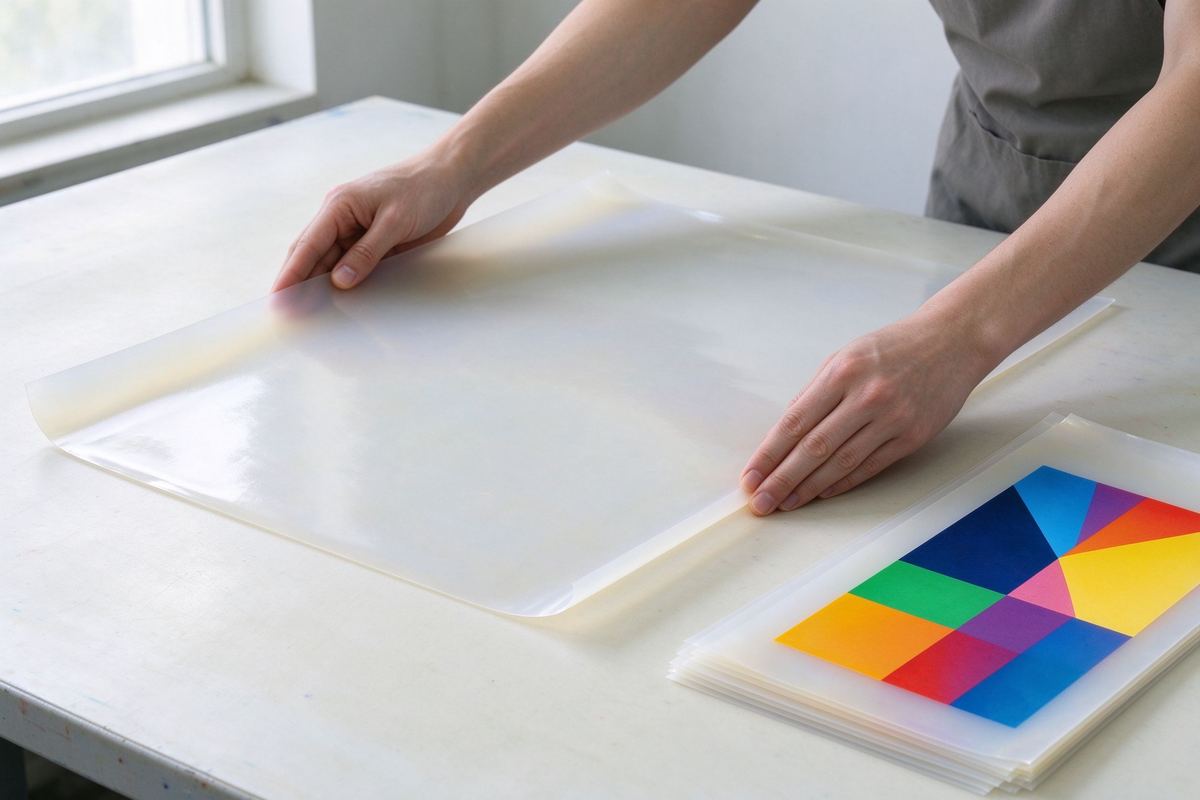
Print in reverse onto the coated face in DTF pigment ink, with the white layer sitting behind the color.
Hot-melt adhesive powder goes on while the ink is still wet. Shake off the excess and return it to the container — too much powder is what makes a transfer stiff.
Approx. 302–356 °F (150–180 °C) for a few seconds, until the powder turns from white to clear.
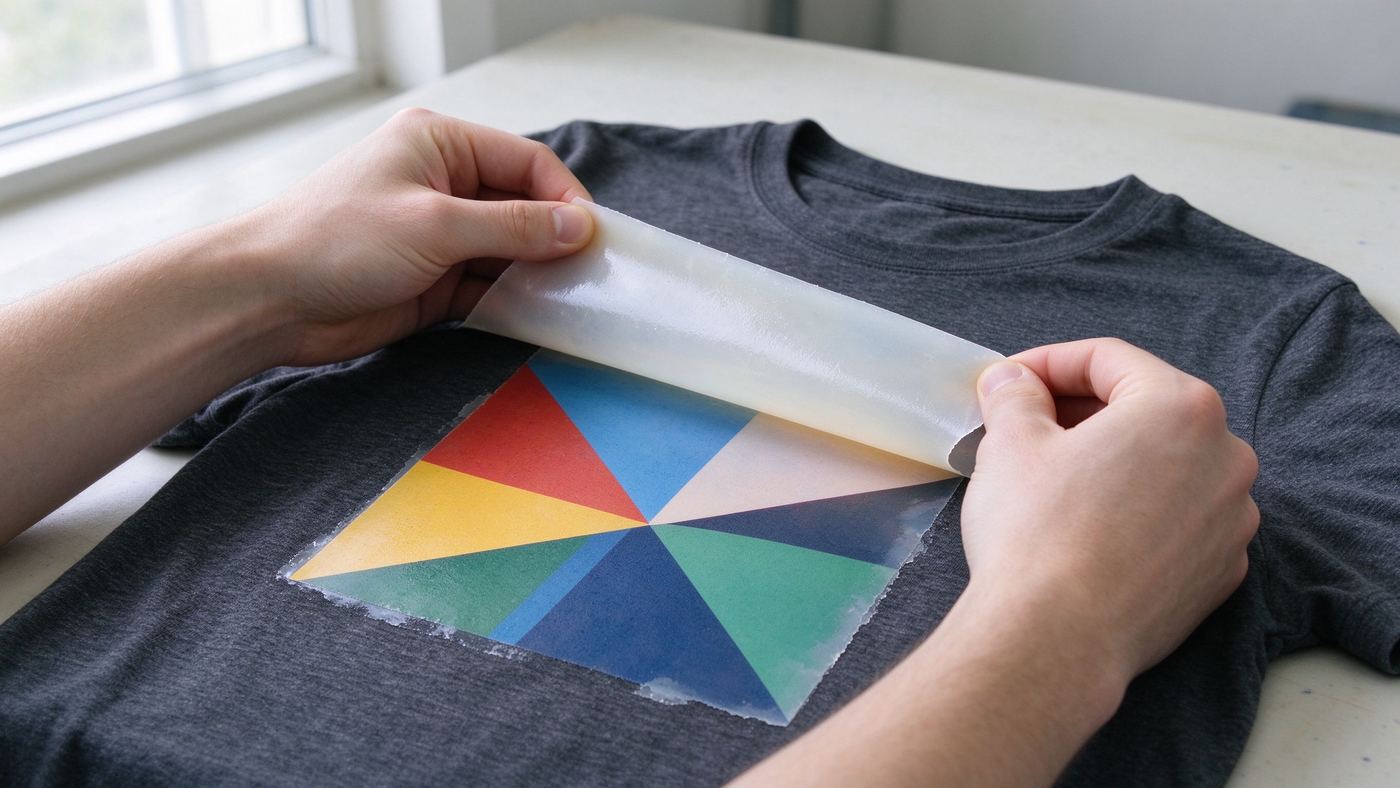
Approx. 275–320 °F (135–160 °C) for about 30 seconds, then let the transfer cool until it is only warm and peel the film away.
Made for DTF, and honest about what it is not.
This is a sheet film for the direct-to-film process. It is not a general purpose printer paper, and it is not a sublimation paper.
| Use it for | Fits | Note |
|---|---|---|
| A3 / 13 in DTF printers | Sheet feed and roll feed | The size these sheets are cut for. Trim down for small logos — a single A3 sheet holds several. |
| DTF pigment ink and hot-melt powder | Standard workflow | A full-color front or back print takes one sheet, so a 200-sheet pack is 200 prints. |
| Cotton, blends, canvas and denim | Light and dark garments | The white pass behind the color is what makes a print look the same on a black shirt as on a white one. |
| Office inkjet or laser printing | — | It is not document paper. An ordinary printer will not lay ink on this coating. |
| Dye-sublimation on light polyester | — | Sublimation has its own papers and its own press settings; do not swap one for the other. |
Note: Curl is the one thing to watch with any sheet film. Store the pack flat, resealed, out of direct sunlight and away from damp, and never leave sheets standing on a corner against a wall.
Four ways to get a transfer onto a shirt.
The same design, four supply choices, and the honest version of what each one costs you in time and waste.
| At a glance | This 200-sheet A3 film | Thin single-side film | Roll film | Ready-made transfers |
|---|---|---|---|---|
| Feed behavior | Flat A3 sheets | Curls and catches in the feed | Needs a roll holder and clean cutting | Nothing to feed |
| Coating | Even matte on both faces | Barely coated, patchy color | Depends on the roll | Decided by someone else |
| White ink density | Holds the white pass evenly | Goes milky where it is thin | Varies by batch | Fixed |
| Cost per print | Low per sheet | Low, until you reprint | Lowest at volume | Highest |
| Best for | Small and mid-volume shops printing on demand | An exercise in reprinting | High-volume continuous runs | A one-off order |
What is in the pack, in plain numbers.
Size, count, thickness and the press settings this film is cut and coated for.
| Specification | Value |
|---|---|
| Sheet size | A3, approx. 11.7 × 16.5 in (297 × 420 mm) |
| Quantity | 200 sheets (2 packs of 100) |
| Base material | PET |
| Thickness | Approx. 75 micron (0.075 mm) |
| Coating | Double-sided matte |
| Peel | Hot or cold peel; pull when just warm for the cleanest release |
| Ink | DTF pigment ink, CMYK plus white |
| Powder cure | Approx. 302–356 °F (150–180 °C) for a few seconds |
| Heat press | Approx. 275–320 °F (135–160 °C) for about 30 seconds |
| Compatible printers | A3 / 13 in DTF printers with sheet or roll feed, and converted desktop DTF printers |
| Storage | Flat, dry, resealed and out of direct sunlight |
200 × A3 transfer film sheets, in two resealable packs of 100
Press and cure settings vary with the printer, the ink and the powder. Run a test transfer on a scrap of the same fabric before a production batch, and if a transfer will not release, add press time rather than heat.
Four habits that keep the whole pack usable.
Film is the easiest thing in a DTF setup to ruin and the easiest to protect. It comes down to where you keep it and how you handle it.
- ▪ Store it flat. Reseal the pack and keep it stacked flat. A sheet that has stood on one corner for a month will curl, and a curled sheet is a jam.
- ▪ Keep it dry and out of the sun. Damp air and direct sunlight both affect the coating. A cool, dry shelf or drawer is what the film wants.
- ▪ Handle the coated face by the edges only. Fingerprints, dust and grease print as blemishes on the finished transfer.
- ▪ Respect the powder and the press. The powder step releases fine dust and the platen is hot. Work in a ventilated area and keep your hands clear of the press.
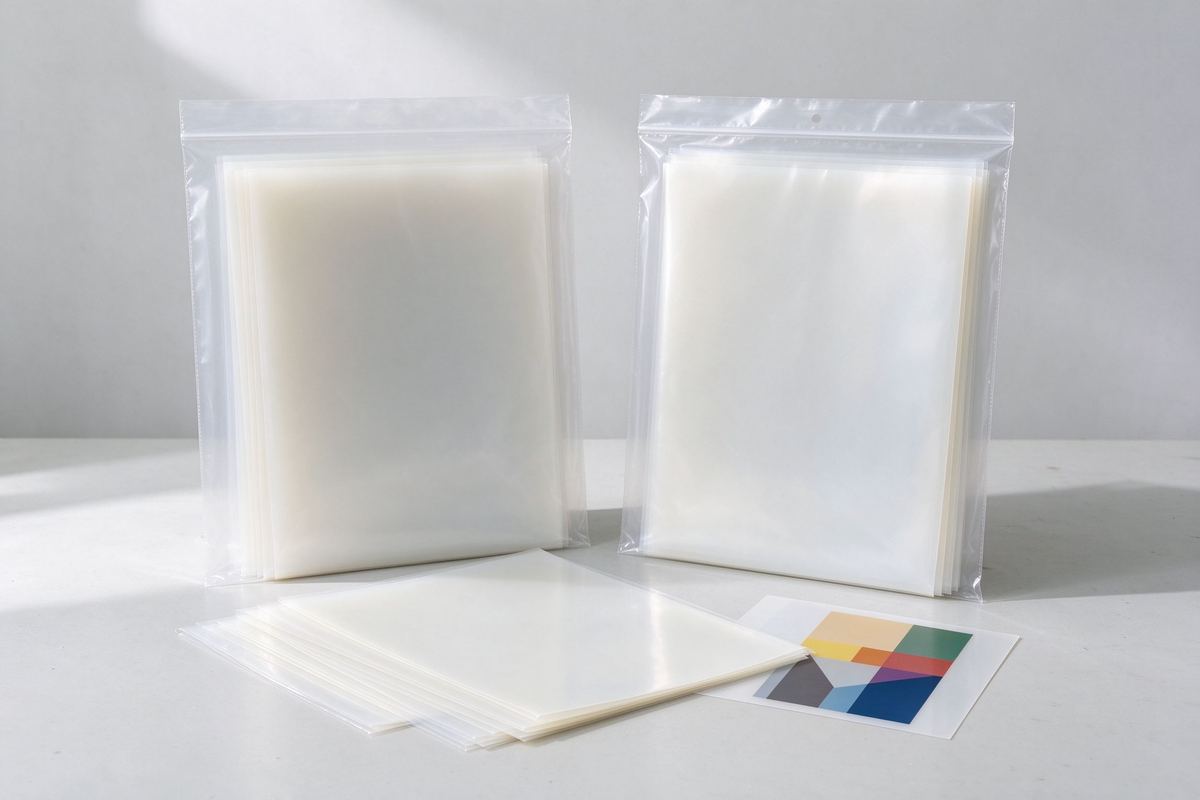
One A3 sheet per full-size front or back print, so 200 prints if you use the whole sheet. Nest two or three smaller logos on one sheet and you get more than that.
Yes. The white ink pass behind the color is what makes a print look the same on a black shirt as on a white one, which is the whole reason the process exists.
They are standard A3 sheets for DTF printers with a sheet or roll feed. Start with your printer’s own film setting and adjust the pass count from there.
This film releases hot or cold. If a corner of the print lifts with the film, let the transfer cool a little longer before pulling.
Reseal the pack, keep it flat, dry and out of direct sun. Sheet film stored that way prints the same in six months as it did in week one.
- ▪ 200 A3 sheets, matte coated on both faces, so they feed flat and take the white pass evenly.
- ▪ Approx. 75 micron PET: soft on the garment after pressing, stable through the cure.
- ▪ Cut square to 11.7 × 16.5 in, ready to trim down for smaller logos.
- ▪ For A3 / 13 in DTF printers, cotton, blends, canvas and denim, light or dark.
200 A3 sheets, double-sided matte, approx. 75 micron PET.



Reviews
There are no reviews yet.